Laundromat Businesses for Sale in Charlotte, NC: Equipment Age, Leases and Real Cash Flow
Published November 2026 | Last Updated November 2026
TL;DR: A laundromat is worth what its machines, its lease, and its utility bills can prove, not what the seller's profit and loss statement says. Check equipment age machine by machine, make sure the lease outlasts your loan, and rebuild cash flow from deposits, payment-system reports, and water bills.
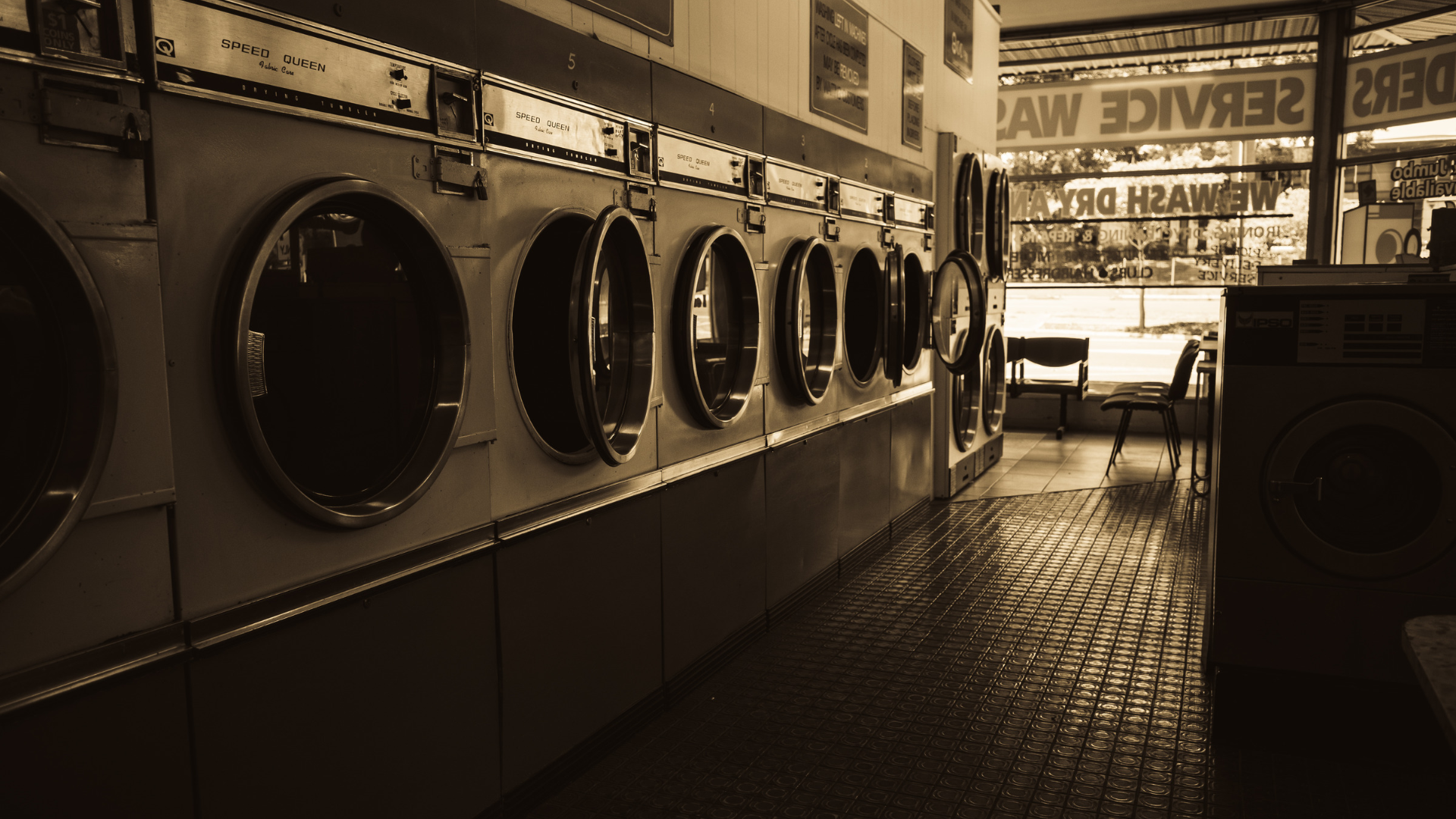
Before buying a laundromat in Charlotte, verify three things: the age and condition of every machine, a lease whose remaining term and options cover your loan, and cash flow rebuilt from bank deposits, payment-system reports, and water bills. The seller's profit and loss statement is where the checking starts, not where it ends.
QUICK ANSWER
Machines, lease, numbers: in that order of what can sink the deal. Old equipment and a short lease are hard to fix after closing, and cash flow you can't reconcile to water bills and deposits isn't cash flow yet.
Key Takeaways
- The CLA's 2024 survey found median utilities at 20% of revenue and rent at 18%, so a store far off those marks needs an explanation
- Lenders commonly want the remaining lease term plus options to cover the loan term
- Water and sewer bills are the hardest number for a seller to fake, and Charlotte's commercial sewer rate rose to $6.88 per Ccf on July 1, 2026
- The CLA's 27% median operating profit is before debt payments, tax, and the owner's pay, so it isn't take-home
- Search North Carolina UCC records for liens on the machines
Looking at a laundromat in the Charlotte area? Talk to a Charlotte business broker or call (704) 428-9010.
A laundromat looks simple on paper: machines make money while you're not there. The numbers behind that picture are where deals go wrong.
Demand is the easy part in Charlotte. About 45% of Mecklenburg County households rent (Mecklenburg housing report), compared with about a third across North Carolina (Census-based analysis), and renters without in-unit machines are the usual laundromat customer.
First Choice Business Brokers Charlotte helps buyers find
businesses for sale in Charlotte, NC, and this guide covers what to check on a laundromat. For licenses and tax registrations, see our guide to
buying a business in North Carolina.
How Do You Judge a Laundromat's Equipment Age and Condition?
Get a machine-by-machine list with make, model, serial number, install date, and repair history, then count how many machines are near the end of their useful life. Equipment age drives repair spending and the utility bill, and it can decide whether a lender will finance the deal.
Guides disagree on how long a commercial machine lasts, from about 10 to 12 years for some top-load washers (deal analysis guide) to 15 to 20 years with good maintenance (buyer's guide). That spread is why install dates and service records beat any rule of thumb.
| Ask for | What it tells you |
|---|---|
| Equipment list with serial numbers and install dates | Real age and how many machines are near replacement |
| Service and repair records by machine | Which machines are chronic problems |
| Equipment leases or loan agreements | Who actually owns the machines |
| A UCC lien search under the seller's legal name | Whether a lender has a claim on the equipment |
| 24 to 36 months of utility bills | Whether old machines are pushing utilities above the norm |
| Payment-system type and age | Whether revenue is verifiable by card reports or only by coin counts |
Utilities are where old machines show up. In the CLA's 2024 survey of 377 owner-operators, median utility spending was 20% of gross revenue, and utilities were the most-cited operating problem (2024 CLA Laundry Industry Survey).
Guidance attributed to the CLA puts stores with all-new machines near 15% of revenue on utilities and stores with old equipment at 30% to 35% (summary). A store far above 20% needs an explanation before you accept any multiple.
Liens are searchable. The North Carolina Secretary of State's UCC records can be searched online at no charge (NC Secretary of State), and a financing statement naming the seller may mean a lender has a claim on the machines.
What Should the Lease Say Before You Buy a Laundromat?
A laundromat can't move its plumbing, so the lease is part of the business. Check the remaining term and options against your loan term, who must approve an assignment, how rent compares with revenue, and what happens to the build-out at the end.
BizBuySell's buyer guide says lenders focus on cash flow, the lease, and the age and condition of the equipment. It adds that five years remaining plus renewal options that bring the total to the loan term can be workable, while five years with no options may fall short of the loan term (BizBuySell).
In the CLA's survey, median rent was 18% of gross revenue among stores that rent, though the mean was higher at 24% because of extreme responses (2024 CLA Laundry Industry Survey). Compare total occupancy, including any triple-net and common-area charges as well as base rent.
Lease questions to ask:
- Term and options. How many years remain, and do the options extend through the full loan term?
- Assignment. Can the lease be assigned to you, and what does the landlord require?
- Rent and escalators. What are the increases, and what are the triple-net charges?
- Use and hours. Does the lease allow the hours and services you plan to offer?
- Redevelopment. Is there a demolition or relocation clause, and who owns the build-out at expiry?
How Do You Find a Laundromat's Real Cash Flow?
Rebuild it from three independent sources: bank deposits, payment-system or vend reports, and water and sewer bills. Then subtract what the seller's profit and loss statement leaves out, such as your own labor, current utility rates, repairs, and a reserve for machines.
The CLA's survey reported median gross revenue of $335,000, with a median operating profit of 27% before taxes, debt service, and owner compensation. On a median store that's about $90,000 before the owner is paid, the loan is repaid, or a machine is replaced (arithmetic on survey medians, not a forecast).
Stores that come to market skew smaller than the surveyed base, with a median revenue near $220,000 in BizBuySell resale data (analysis). Treat the survey medians as a yardstick, not a promise.
Water is the hardest number to fake: Charlotte Water's commercial rates for July 1, 2026 through June 30, 2027 are $3.65 per Ccf (100 cubic feet) for water and $6.88 per Ccf for sewer, up from $6.46 for sewer a year earlier (Charlotte Water). A seller's trailing 12 months of bills will understate current utilities, so reprice them at today's rates.
Five adjustments to make before you trust the number:
- Your labor. If the owner works the store, price those hours at what an attendant would be paid.
- Current utility rates. Reprice water, sewer, gas, and electric at today's rates, not last year's.
- Repairs and parts. Use the service records, not the seller's estimate.
- A replacement reserve. Set aside money each year for machines that will wear out.
- Debt service. Subtract the loan payments from what's left to see whether the store carries them.
Cash-heavy stores need extra care, since reported revenue can be inflated for a sale or understated for taxes (SearchSphere). Make sure the tax returns, bank deposits, and payment reports tell the same story as the profit and loss statement.
This article is general information, not legal, tax, or financial advice. Bring your own CPA and business attorney into any acquisition.
How Do You Start Looking for a Laundromat in Charlotte?
Tell a broker what kind of laundromat you want, and expect to show proof of funds or verifiable financing before a custom search begins. Then bring in your CPA and attorney before you make an offer, since the lease and the numbers both need professional review.
What to do first:
- Define the target. Attended or absentee, coin or card payment, size, and the part of the metro you'd consider.
- Show proof of funds. First Choice asks buyers for proof of funds or verifiable financing before a custom search begins (First Choice).
- Line up advisors. A CPA to rebuild the cash flow and an attorney to review the lease and the purchase agreement.
- Gather the documents. Request the equipment list, three years of tax returns, deposits, utility bills, and the full lease.
- Where we are. 301 McCullough Drive #400, Charlotte, NC 28262. Call (704) 428-9010 or use the contact page.
Frequently Asked Questions
What should I check before buying a laundromat in Charlotte?
Check the age and condition of every machine, a lease whose remaining term and options cover your loan, and cash flow rebuilt from bank deposits, payment reports, and water bills. Add a UCC lien search and a CPA review before you commit.
How do I verify a laundromat's revenue?
Reconcile three independent sources: bank deposits, payment-system or vend reports, and water and sewer bills. If the tax returns, deposits, and utility usage don't tell the same story as the seller's profit and loss statement, ask why before going further.
How old should laundromat equipment be?
There's no single rule, since guides put machine life anywhere from about 10 to 20 years. Ask for install dates and service records, then compare utility spending against the CLA's 20% median to see whether age is costing the store.
How long should a laundromat lease have left?
Lenders commonly want the remaining term plus renewal options to cover the loan term. BizBuySell's buyer guide says five years with no options may fall short, so confirm the requirement with your lender early.
What are typical laundromat expenses?
In the CLA's 2024 survey, median utilities were 20% of revenue, rent 18% among stores that rent, and payroll 20% among stores with payroll. Median operating profit was 27% before taxes, debt service, and owner pay.
Are laundromats a good business in Charlotte?
Demand looks supportive, with about 45% of Mecklenburg County households renting, but results depend on the store: its equipment, its lease, and its utility bills. Verify those before you rely on the market.
How do I start looking for a laundromat in Charlotte?
Contact First Choice Business Brokers Charlotte at (704) 428-9010 or through the contact page, and describe the laundromat you want. Expect to show proof of funds, and bring your CPA and attorney in early.
Trust & Authority
About the author: Christie Curtis is President and Principal Broker at First Choice Business Brokers Charlotte. She has a business degree from the University of North Carolina at Charlotte, and she and her husband, Scott, have owned various businesses together for more than 20 years.
Meet the team.
Scott and I have run our own businesses for over 20 years, so I read a seller's numbers the way an owner does. We work with buyers across the Charlotte area from our office at 28262.
Summary and Next Step
A laundromat is worth what its machines, lease, and utility bills can prove. Check the equipment machine by machine, make sure the lease outlasts your loan, and rebuild cash flow from deposits and water bills.
Ready to look at laundromats and other businesses in Charlotte?
Browse available businesses or
talk to a buyer's broker at First Choice Business Brokers Charlotte, 301 McCullough Drive #400, Charlotte, NC 28262, (704) 428-9010.
Disclaimer: This is educational content, not financial, legal, tax, or lending advice. Industry benchmarks, utility rates, and lease and lender expectations cited are general, can change, and vary by business and transaction. Consult a qualified business broker, CPA, attorney, and lender before making any purchase decision.
Recent articles for you